Jump to section

Seabird Data Reporting across tuna RFMOs | 2025
Seabird Data Reporting across tuna RFMOs | 2025
Seabird Data Reporting across tuna RFMOs | 2025
Seabird Mitigation Measures and associated Data Collection and Procedures
Seabird Mitigation Measures and associated Data Collection and Procedures
Seabird Mitigation Measures and associated Data Collection and Procedures
IMCS Network · Last updated: August 2025
IMCS Network · Last updated: August 2025


01. Methodology
Methodology
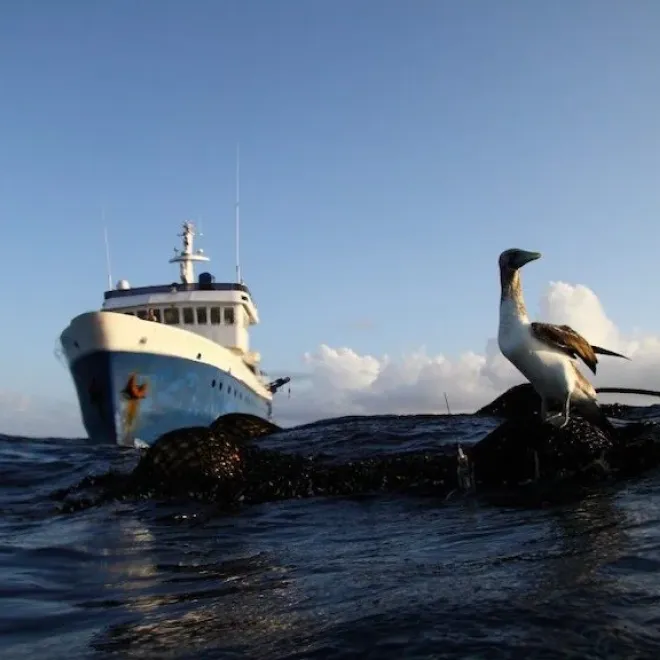
Photo: ©Copyright ISSF (2011), Fabien Forget
The IMCS Network, in collaboration with the Tuna Compliance Network (TCN), has developed this resource to provide a clear and accessible overview of RFMO obligations, based on information available as of August 2025.
Recognising the dynamic and evolving nature of RFMOs, including changes to obligations, compliance requirements and operational practices, this resource is intended as a living reference. It will be reviewed and updated annually to reflect the most current information available.
While every effort has been made to ensure accuracy, users are encouraged to refer to the official instruments, measures and guidance issued by each RFMO.
We update this report annually, get an email alert when it's next updated.

Introduction
02. Introduction
Differences across RFMOs
Each of the tuna regional fisheries management organisations (RFMOs) contains different data collection requirements regarding seabird interactions and mitigation measures implemented by longline fishing operators.
Observers and electronic monitoring
Tuna RFMOs’ conservation and management measures (CMMs) specify various operator level reporting requirements that apply both within national jurisdiction as well as the high seas. However, as CMMs and other RFMO requirements are predominantly directed towards countries, most operator level reporting requirements are left to the discretion of the relevant Member upon consideration of its own national and international obligations.
Member vs operator reporting
There are both similarities and differences in each tuna RFMO’s collection forms and procedures in relation to seabird reporting – with reporting requirements occurring at both Member (i.e. country) and operator (i.e. vessel) levels. Similarly, each tuna RFMO requires different levels of independent monitoring of vessels whether through human observers or electronic monitoring systems.

Introduction
02. Introduction
Differences across RFMOs
Each of the tuna regional fisheries management organisations (RFMOs) contains different data collection requirements regarding seabird interactions and mitigation measures implemented by longline fishing operators.
Observers and electronic monitoring
Tuna RFMOs’ conservation and management measures (CMMs) specify various operator level reporting requirements that apply both within national jurisdiction as well as the high seas. However, as CMMs and other RFMO requirements are predominantly directed towards countries, most operator level reporting requirements are left to the discretion of the relevant Member upon consideration of its own national and international obligations.
Member vs operator reporting
There are both similarities and differences in each tuna RFMO’s collection forms and procedures in relation to seabird reporting – with reporting requirements occurring at both Member (i.e. country) and operator (i.e. vessel) levels. Similarly, each tuna RFMO requires different levels of independent monitoring of vessels whether through human observers or electronic monitoring systems.

Introduction
02. Introduction
Differences across RFMOs
Each of the tuna regional fisheries management organisations (RFMOs) contains different data collection requirements regarding seabird interactions and mitigation measures implemented by longline fishing operators.
Observers and electronic monitoring
Tuna RFMOs’ conservation and management measures (CMMs) specify various operator level reporting requirements that apply both within national jurisdiction as well as the high seas. However, as CMMs and other RFMO requirements are predominantly directed towards countries, most operator level reporting requirements are left to the discretion of the relevant Member upon consideration of its own national and international obligations.
Member vs operator reporting
There are both similarities and differences in each tuna RFMO’s collection forms and procedures in relation to seabird reporting – with reporting requirements occurring at both Member (i.e. country) and operator (i.e. vessel) levels. Similarly, each tuna RFMO requires different levels of independent monitoring of vessels whether through human observers or electronic monitoring systems.

03. RFMO Overview
RFMO seabird mitigation requirements
RFMO seabird mitigation requirements
RFMOs require different levels of detail regarding the use of seabird mitigation measures and reporting on seabird interactions for tuna longline fisheries.
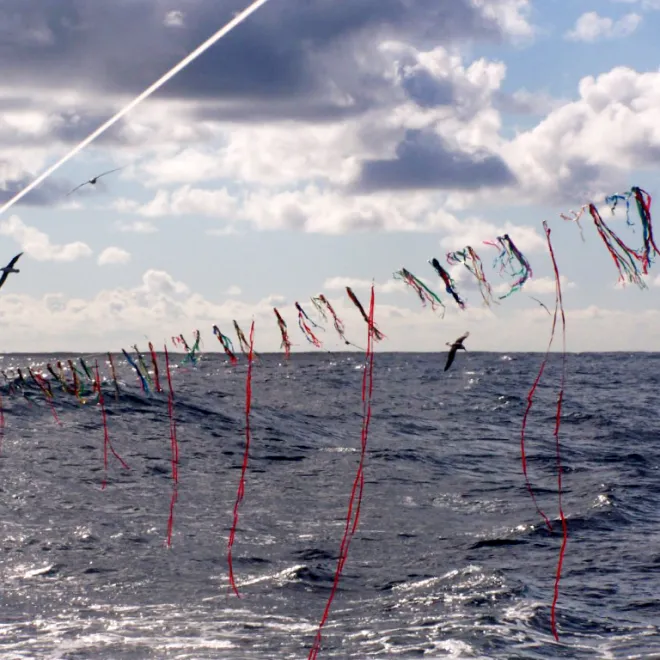
Photo: ©Copyright ISSF, Sebastian Jimenez, Albatross Task Force, Uruguay
These differences exist across each RFMO at both Member and operator levels. However, there is a clear expectation within each RFMO for longline operators to report basic data related to seabird interactions. At a minimum, these reporting requirements would generally support recording species interactions in Member annual reports to respective Commissions. Complementing this, scientific observer programs provide crucial, and often more detailed, monitoring of seabird interactions and mitigation efforts. As such, RFMOs' actual observer coverage rates are important for evaluating the scope and reliability of the collected data. Tuna RFMOs are also increasing adoption of e-monitoring in an effort to enhance existing monitoring levels.
The variation of RFMO reporting requirements at the Member level is likely to flow to data collection procedures and fields collected at the operator level. In this respect, each RFMO Member’s operational reporting may differ depending on which tuna RFMOs it operates in. Similarly, Members may regulate their vessels’ seabird operational requirements based on specific area of operation linked to different RFMO requirements (e.g. high seas vs. in zone, or based on latitude).
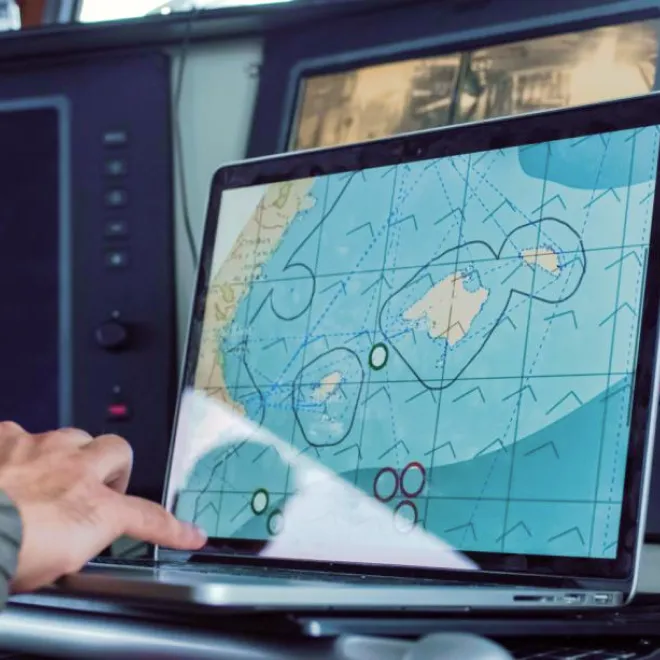
03. RFMO Overview
RFMO seabird mitigation requirements
RFMOs require different levels of detail regarding the use of seabird mitigation measures and reporting on seabird interactions for tuna longline fisheries.
Photo: ©Copyright ISSF, Sebastian Jimenez, Albatross Task Force, Uruguay
These differences exist across each RFMO at both Member and operator levels. However, there is a clear expectation within each RFMO for longline operators to report basic data related to seabird interactions. At a minimum, these reporting requirements would generally support recording species interactions in Member annual reports to respective Commissions. Complementing this, scientific observer programs provide crucial, and often more detailed, monitoring of seabird interactions and mitigation efforts. As such, RFMOs' actual observer coverage rates are important for evaluating the scope and reliability of the collected data. Tuna RFMOs are also increasing adoption of e-monitoring in an effort to enhance existing monitoring levels.
The variation of RFMO reporting requirements at the Member level is likely to flow to data collection procedures and fields collected at the operator level. In this respect, each RFMO Member’s operational reporting may differ depending on which tuna RFMOs it operates in. Similarly, Members may regulate their vessels’ seabird operational requirements based on specific area of operation linked to different RFMO requirements (e.g. high seas vs. in zone, or based on latitude).

04. Membership
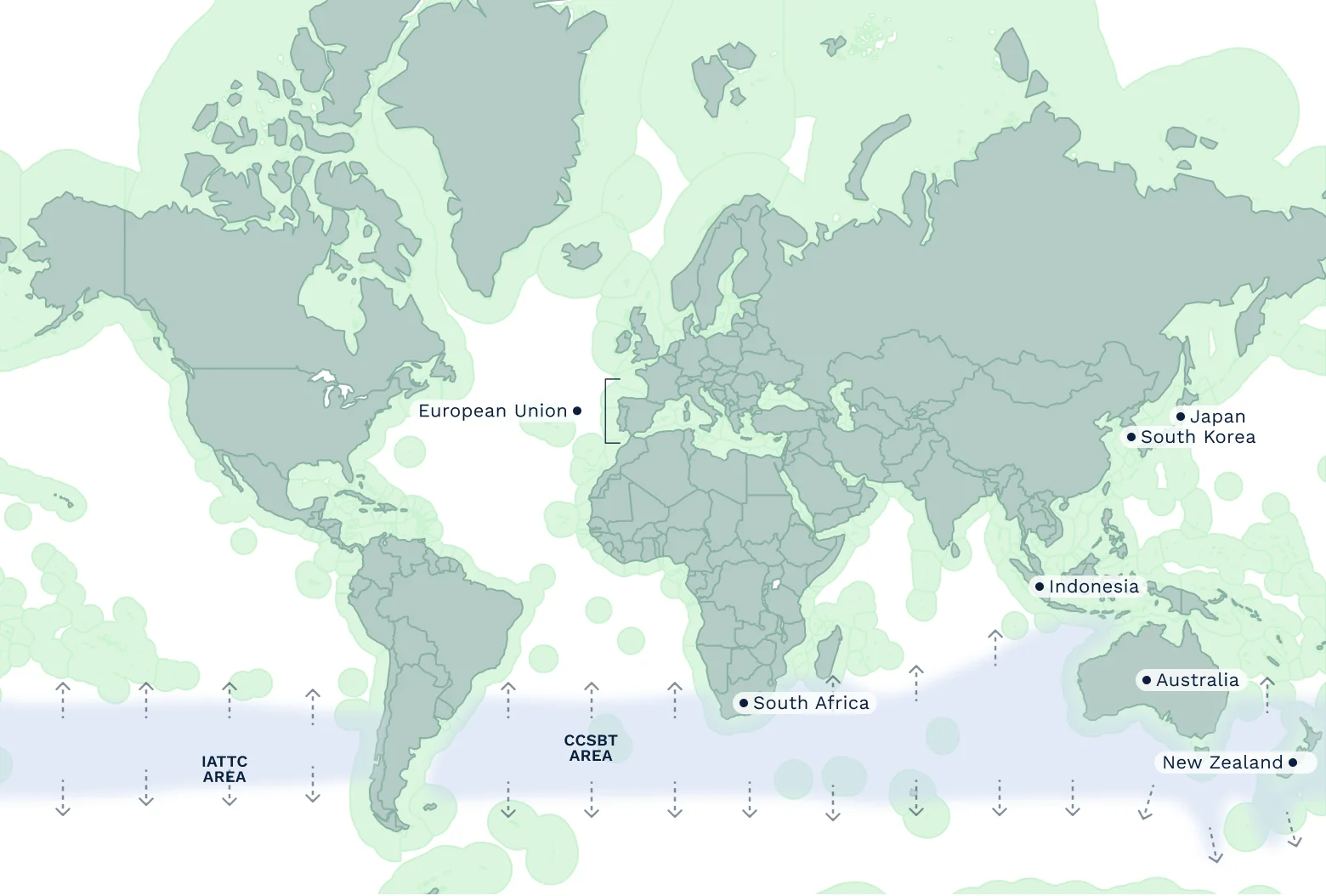
Tuna RFMO Membership: Map
View Comparison Table
Show (RFMO):
CCSBT
IATTC
ICCAT
IOTC
WCPFC


Commission for the Conservation of Southern Bluefin Tuna or CCSBT

Member
Area of competence
CCSBT has no specific
geographical area of jurisdiction. The area instead applies to Southern Bluefin Tuna (Thunnus maccoyii - SBT) throughout
its global distribution.
EEZs
National level requirements
RFMO member countries apply different operator (i.e. vessel) level reporting requirements to their vessels based on range of factors.

National bycatch policies and mitigation requirements
National priorities and approaches to reducing bycatch in their fisheries, including national decisions on prescribed or approved mitigation measures.

RFMO membership

Fisheries management and operational decisions
Compliance
The ability for Members to verify a vessel’s compliance with seabird mitigation requirements differs depending on existing monitoring, control and surveillance programs in place for members’ fisheries.

The availability of independent monitoring data to verify compliance (i.e. through human observer programs and e-monitoring systems).

The occurrence and rate of at-sea boardings and inspections and/or port inspections.
04. Membership
Tuna RFMO Membership: Map
View Comparison Table
Show (RFMO):
CCSBT
IATTC
ICCAT
IOTC
WCPFC
Commission for the Conservation of Southern Bluefin Tuna or CCSBT
Member
Area of competence
EEZs
National level requirements
RFMO member countries apply different operator (i.e. vessel) level reporting requirements to their vessels based on range of factors.
National bycatch policies and mitigation requirements
National priorities and approaches to reducing bycatch in their fisheries, including national decisions on prescribed or approved mitigation measures.
RFMO membership
Fisheries management and operational decisions
Compliance
The ability for Members to verify a vessel’s compliance with seabird mitigation requirements differs depending on existing monitoring, control and surveillance programs in place for members’ fisheries.
The availability of independent monitoring data to verify compliance (i.e. through human observer programs and e-monitoring systems).
The occurrence and rate of at-sea boardings and inspections and/or port inspections.
04. Membership
Tuna RFMO Membership: Map
View Comparison Table
Show (RFMO):
CCSBT
IATTC
ICCAT
IOTC
WCPFC
Commission for the Conservation of Southern Bluefin Tuna or CCSBT
Member
Area of competence
EEZs
National level requirements
RFMO member countries apply different operator (i.e. vessel) level reporting requirements to their vessels based on range of factors.
National bycatch policies and mitigation requirements
National priorities and approaches to reducing bycatch in their fisheries, including national decisions on prescribed or approved mitigation measures.
RFMO membership
Fisheries management and operational decisions
Compliance
The ability for Members to verify a vessel’s compliance with seabird mitigation requirements differs depending on existing monitoring, control and surveillance programs in place for members’ fisheries.
The availability of independent monitoring data to verify compliance (i.e. through human observer programs and e-monitoring systems).
The occurrence and rate of at-sea boardings and inspections and/or port inspections.

05. Independent Monitoring
Independent Monitoring
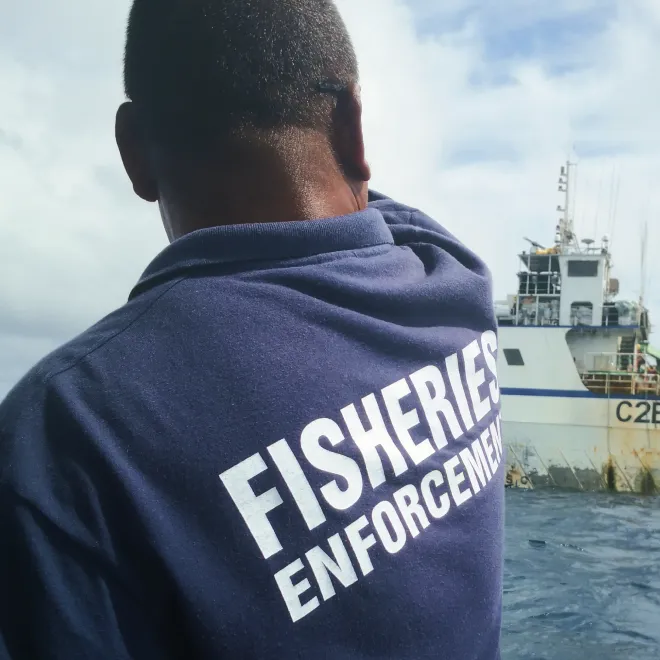
WCPFC, IOTC, IATTC and ICCAT each rely heavily on scientific observer programs for detailed monitoring of seabird interactions and operators’ use of mitigation measures. Monitoring data from observers provide valuable data inputs for recording species-specific bycatch data and information on mitigation implementation. Observer coverage rates within each RFMO are therefore an important metric for assessing the reliability and representativeness of seabird data.
Observer coverage levels differ between RFMOs
CCSBT
CCSBT's Scientific Observer Program aims for 10% observer coverage (representative of different vessel-types in distinct areas and time).
IATTC
IATTC has a minimum requirement of 5% observer coverage for longline vessels greater than 20m in overall length. However, IATTC analyses of available observer data indicate that current observer coverage levels are too low to reliably estimate total bycatch of seabirds.
IOTC
IOTC's Resolution 23/07 emphasises data collection through observers where observer programs are implemented.
WCPFC
WCPFC has a baseline requirement of 5% observer coverage for longline vessels, but its Members’ achieved observer coverage rates differ.
RFMOs are increasingly implementing electronic monitoring as a means to increase independent monitoring of fishing activity and collection of bycatch data.
Actual observer coverage rates within tuna RFMOs across years can vary significantly. This raises challenges with detecting statistically rare events such as interactions with seabirds.
Because observer and coverage requirements and levels differ between RFMOs, the analytical value drawn from these datasets is inconsistent. However, each tuna RFMO recognises the importance of scientific observer programs to support the effective monitoring of seabird interactions and operators’ use of mitigation measures.
05. Independent Monitoring
Independent Monitoring
WCPFC, IOTC, IATTC and ICCAT each rely heavily on scientific observer programs for detailed monitoring of seabird interactions and operators’ use of mitigation measures. Monitoring data from observers provide valuable data inputs for recording species-specific bycatch data and information on mitigation implementation. Observer coverage rates within each RFMO are therefore an important metric for assessing the reliability and representativeness of seabird data.
Observer coverage levels differ between RFMOs
CCSBT
CCSBT's Scientific Observer Program aims for 10% observer coverage (representative of different vessel-types in distinct areas and time).
IATTC
IATTC has a minimum requirement of 5% observer coverage for longline vessels greater than 20m in overall length. However, IATTC analyses of available observer data indicate that current observer coverage levels are too low to reliably estimate total bycatch of seabirds.
IOTC
IOTC's Resolution 23/07 emphasises data collection through observers where observer programs are implemented.
WCPFC
WCPFC has a baseline requirement of 5% observer coverage for longline vessels, but its Members’ achieved observer coverage rates differ.
RFMOs are increasingly implementing electronic monitoring as a means to increase independent monitoring of fishing activity and collection of bycatch data.
Actual observer coverage rates within tuna RFMOs across years can vary significantly. This raises challenges with detecting statistically rare events such as interactions with seabirds.
Because observer and coverage requirements and levels differ between RFMOs, the analytical value drawn from these datasets is inconsistent. However, each tuna RFMO recognises the importance of scientific observer programs to support the effective monitoring of seabird interactions and operators’ use of mitigation measures.
05. Independent Monitoring
Independent Monitoring
WCPFC, IOTC, IATTC and ICCAT each rely heavily on scientific observer programs for detailed monitoring of seabird interactions and operators’ use of mitigation measures. Monitoring data from observers provide valuable data inputs for recording species-specific bycatch data and information on mitigation implementation. Observer coverage rates within each RFMO are therefore an important metric for assessing the reliability and representativeness of seabird data.
Observer coverage levels differ between RFMOs
CCSBT
CCSBT's Scientific Observer Program aims for 10% observer coverage (representative of different vessel-types in distinct areas and time).
IOTC
IOTC's Resolution 23/07 emphasises data collection through observers where observer programs are implemented.
IATTC
IATTC has a minimum requirement of 5% observer coverage for longline vessels greater than 20m in overall length. However, IATTC analyses of available observer data indicate that current observer coverage levels are too low to reliably estimate total bycatch of seabirds.
WCPFC
WCPFC has a baseline requirement of 5% observer coverage for longline vessels, but its Members’ achieved observer coverage rates differ.
RFMOs are increasingly implementing electronic monitoring as a means to increase independent monitoring of fishing activity and collection of bycatch data.
Actual observer coverage rates within tuna RFMOs across years can vary significantly. This raises challenges with detecting statistically rare events such as interactions with seabirds.
Because observer and coverage requirements and levels differ between RFMOs, the analytical value drawn from these datasets is inconsistent. However, each tuna RFMO recognises the importance of scientific observer programs to support the effective monitoring of seabird interactions and operators’ use of mitigation measures.


What are the seabird reporting requirements in each tuna RFMO?
What are the seabird reporting requirements in each tuna RFMO?
06. RFMO Requirements
CCSBT
IATTC
ICCAT
IOTC
WCPFC

Tuna RFMOs’ seabird mitigation and reporting requirements
Tuna RFMOs’ seabird mitigation and reporting requirements
07. Comparisons
Applicable Measures
Mitigation Measures
Observer Coverage
Data Collection
Operational Reporting
Observer Data
CCSBT
IATTC
ICCAT
IOTC
WCPFC
CCSBT - Applicable Measures
Resolution to Align CCSBT's Ecologically Related Species measures with those of other tuna RFMOs.
When fishing outside the Areas of Competence of other tuna RFMOs, CCSBT Members and CNMs required to use tori lines in all longline SBT fisheries below 30 degrees south. However, when fishing within the Areas of Competence of IOTC, WCPFC, or ICCAT, they are obligated to comply with the ERS Measures in force in that area (whether or not the Member or Cooperating Non-Member is a member of the tuna RFMO), as outlined in ERS Alignment Resolution (Annex I).
Applicable Measures
CCSBT
IATTC
ICCAT
IOTC
WCPFC
CCSBT - Applicable Measures
Resolution to Align CCSBT's Ecologically Related Species measures with those of other tuna RFMOs.
When fishing outside the Areas of Competence of other tuna RFMOs, CCSBT Members and CNMs required to use tori lines in all longline SBT fisheries below 30 degrees south. However, when fishing within the Areas of Competence of IOTC, WCPFC, or ICCAT, they are obligated to comply with the ERS Measures in force in that area (whether or not the Member or Cooperating Non-Member is a member of the tuna RFMO), as outlined in ERS Alignment Resolution (Annex I).
Applicable Measures
CCSBT
IATTC
ICCAT
IOTC
WCPFC
CCSBT - Applicable Measures
Resolution to Align CCSBT's Ecologically Related Species measures with those of other tuna RFMOs.
When fishing outside the Areas of Competence of other tuna RFMOs, CCSBT Members and CNMs required to use tori lines in all longline SBT fisheries below 30 degrees south. However, when fishing within the Areas of Competence of IOTC, WCPFC, or ICCAT, they are obligated to comply with the ERS Measures in force in that area (whether or not the Member or Cooperating Non-Member is a member of the tuna RFMO), as outlined in ERS Alignment Resolution (Annex I).

08. Summary
Summary

Seabird reporting and mitigation requirements differ between tuna RFMOs. These differences extend to both Member reporting requirements and to operator level requirements. As a result, operator level reporting requirements are largely left to the discretion of each Member and prescribed by each upon consideration of its own suite of national and international obligations. The operator level reporting requirements applied by Members to their vessels differ based on range of factors, including RFMO membership, national bycatch policy decisions bycatch, and national vessel-level regulatory requirements.